
📊 If You're Not Measuring DEI, You're Not Doing DEI
Let’s cut to the chase: you can’t improve what you don’t measure. And if you’re not measuring your organization’s inclusion, diversity, equity, and accessibility (IDEA) efforts… you’re not serious about them.
Intentions are nice. Statements are fine. But without data, DEI remains performative. And let’s be honest: performative inclusion is just exclusion in a prettier outfit.
🧠 Why Measurement Matters
We’ve all heard the phrase: “What gets measured gets done.” It applies to sales, customer service, marketing, and operations — so why should DEI be any different?
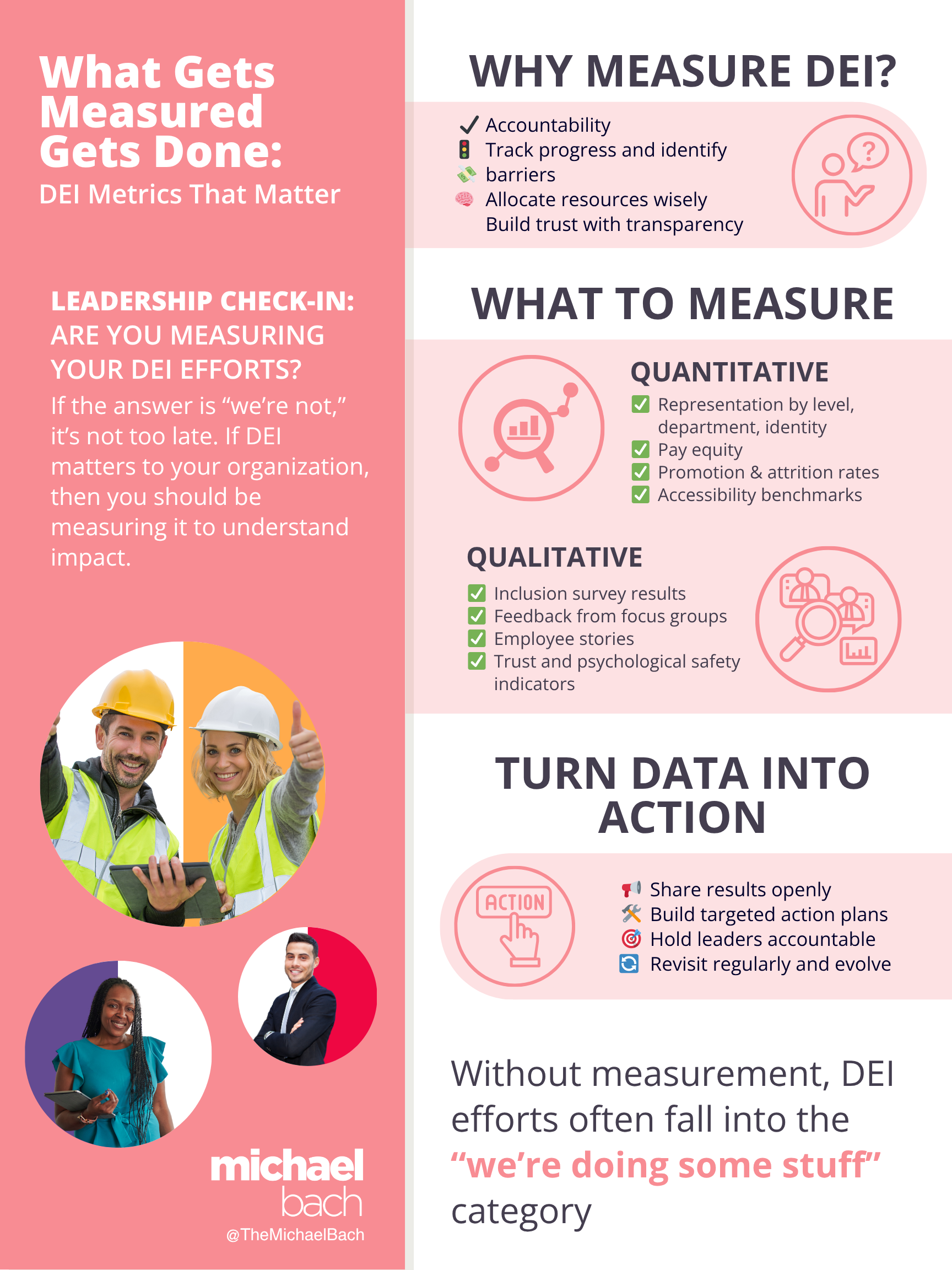
Measuring DEI:
Makes your progress visible
Identifies gaps and inequities
Helps you allocate resources strategically
Builds trust through transparency
Moves you from vibes to actual accountability
Because let’s face it: good intentions without data are just educated guesses. And when people’s experiences and livelihoods are on the line, “guessing” doesn’t cut it.
📉 The Risk of Skipping the Metrics
Without measurement, DEI efforts often fall into the “we’re doing some stuff” category:
A few training sessions
A heritage month event or two
A rainbow logo in June
But without tracking outcomes, you have no idea whether these efforts are meaningful or just noise.
· Are your systems more equitable than they were a year ago?
· Are your marginalized employees advancing at the same rate as others?
· Is your organization safer, more inclusive, more accessible?
If you don’t have data to answer these questions, the answer is likely “no.”
📐 What Should You Measure?
DEI isn’t just about who’s in the room—it’s also about how people experience being there. That means you need both quantitative and qualitative metrics. Here’s what to consider:
📊 Quantitative Data:
Representation across all levels, especially leadership
Pay equity across gender, race, disability, etc.
Hiring, promotion, and turnover trends by identity
Accessibility compliance in digital and physical spaces
💬 Qualitative Data:
Sense of belonging
Experiences of psychological safety
Perceptions of fairness in performance reviews
Barriers to advancement or inclusion
Collect it through anonymous surveys, focus groups, exit interviews, and lived experience storytelling. Numbers tell part of the story. People tell the rest.
🔍 Measurement Without Action is Useless
Gathering the data is just the start. The real work is in what you do with it. Use it to:
Create targeted action plans
Hold leadership accountable
Resource teams appropriately
Shift policies that don’t work
Tell the truth about where you are—and where you need to go
And for the love of equity: share the results. Internally and, when possible, publicly. Transparency builds trust. Hiding the numbers only signals fear or failure.
🧭 Start Where You Are
If you’re overwhelmed, don’t panic. The point isn’t to be perfect—it’s to be intentional.
Start by asking:
What data do we already collect?
Where are the gaps?
Who is missing from this conversation?
How can we involve people with lived experience in shaping what we measure?
Then build the roadmap. Be honest about where you are. Celebrate progress. Own the setbacks. Because a DEI strategy without measurement is like a map without a compass—you might move, but you won’t get where you need to go.
💥 The Bottom Line
If you’re not measuring your DEI efforts, you’re not doing DEI right. You’re dabbling in it. You’re performative at best, harmful at worst. But when you put metrics behind your values, you move from intention to impact.
So ask yourself: What are we measuring? Better yet—what are we afraid to measure? That’s where the work begins.
Learn more about Michael’s speaking topic, What Gets Measured, Gets Done: Measuring Success in Inclusion, Diversity, Equity and Accessibility.